Originally written by Tami Adams for Corporate Meetings Network, published September 2026.
We have more tools than ever to make events smarter, faster and more personalized. AI can help us build agendas, analyze attendee data, create content, recommend connections and streamline almost every part of the planning process.
But as our world becomes increasingly digital and AI-enabled, I believe the greatest value of live events is becoming increasingly human.
People don’t just want to attend. They want to feel something. They want to participate, contribute, laugh, play, learn, connect and leave differently than when they arrived.
And that requires us to stop assuming connection will happen simply because we put hundreds of people in the same room.
Human connection needs to be designed.
Stop Leaving Networking to Chance
Think about traditional networking: put people in a room, add food and drinks, play some music and tell them to mingle.
For some attendees, that’s fantastic. For others, it’s their nightmare.
If connection is an important outcome of an event, why are we leaving it entirely up to attendees to create it?
Facilitated networking can give people a reason to start talking. Conversation prompts, shared challenges, games, interest badges, small-group activities and friendly competition can eliminate that awkward first step of approaching a stranger.
At MPI’s theEVENT, for example, attendees received bags and could collect badges throughout the event. It was simple, but it created movement, interaction, conversations with exhibitors and a little friendly competition.
The experience gave people something to do together instead of simply telling them to network.
That’s the difference between hoping for connection and designing for it.
Your Speakers Should Be Part of the Experience
The same thinking should apply to the mainstage.
At TA Speakers Management, we talk a lot about moving beyond the transactional keynote. A speaker shouldn’t simply arrive, deliver 60 minutes of content and disappear.
The question we ask is: How can this person help create an experience that lasts beyond their time on stage?
That starts with deep customization. Speakers need to understand who is in the room, what they are experiencing and what the organization ultimately wants people to think, feel or do differently.
But customization can go much further than changing a few stories or slides.
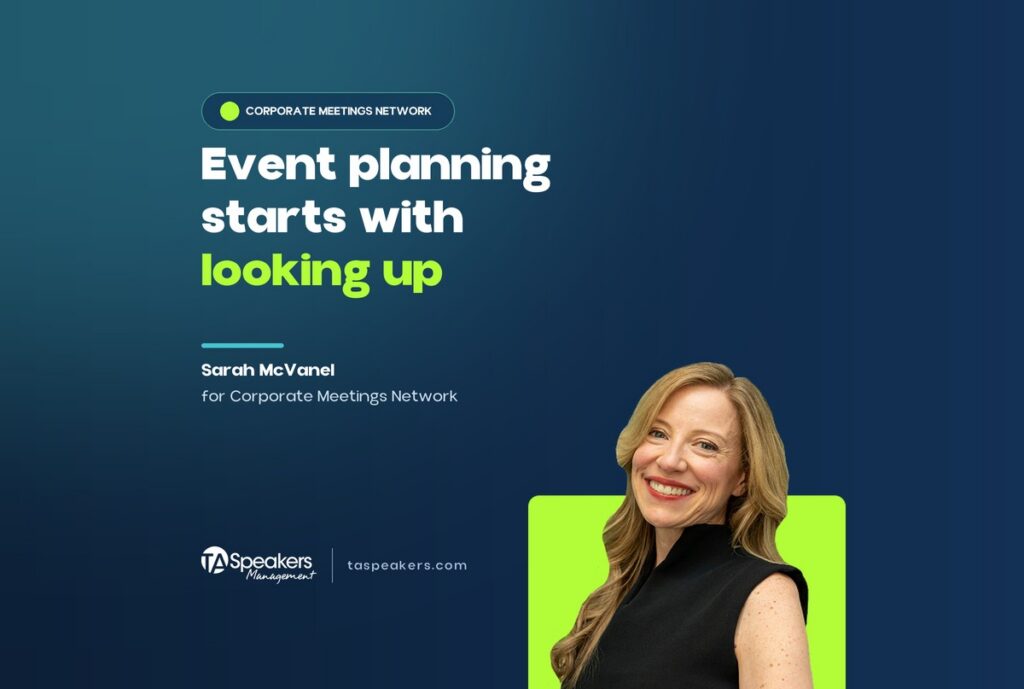
Recognition expert Sarah McVanel builds interaction directly into her keynotes. She might ask an audience to text someone a genuine compliment and then share the responses that come back. In a session about failing forward, she has even hip-hop danced on stage and invited attendees to join her, demonstrating the discomfort and growth of trying something imperfectly in real time.
That experience can extend beyond the keynote through activations such as a Thankful Wall where attendees recognize one another throughout the event.
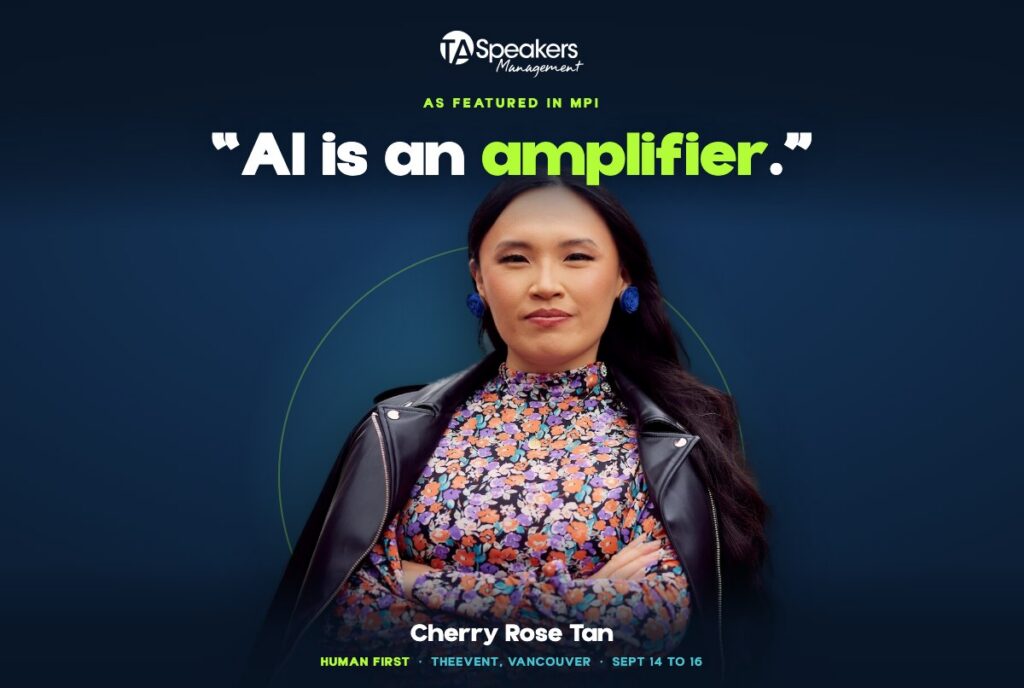
Daniel Lewis has created custom teas for audiences and even AI-generated songs specifically for client events. Cherry Rose Tan uses live audience polling to shape conversations about AI in real time and provides post-event resources that continue the learning. Leo Chan puts LEGO® directly into people’s hands so they can experience creativity and innovation through play rather than simply hearing about it.
Other speakers use myth-busting, audience challenges, meet-and-greets, book signings, receptions and community givebacks to make their presence part of the larger event ecosystem.
The keynote becomes more than content.
It becomes an experience.
Design for How Humans Actually Experience Events
Designing for humans also means recognizing that attendees don’t all experience an event the same way.
Attention spans are shorter. Overstimulation is real. Some people thrive in a packed ballroom; others need space to decompress before the evening reception.
That means thinking about nursing rooms, quiet spaces, accessibility and neurodivergent attendees. It means allowing enough time between programming and social events for someone to return to their room, recharge and come back ready to participate.
It also means reconsidering where learning happens.
Some of my most memorable conference experiences haven’t happened in ballrooms. Learning journeys can take attendees into the destination itself, onto a boat, into a local venue or out into the community, where the location becomes part of the learning. At MPI’s World Education Congress, I’ve experienced sessions that moved beyond traditional conference spaces and transformed the destination into part of the program.
We remember experiences because we participated in them.
Ask a Different Question
As planners, perhaps one of the most important questions we can ask isn’t:
“What should we put on the agenda?”
It’s:
“What do our people need from us right now?”
Maybe they need knowledge. Maybe they need play. Maybe they need to meet someone who understands exactly what they’re going through. Maybe they need to laugh, move, contribute, recharge or hear a real story from a real person that reminds them they’re not alone.
AI absolutely belongs in the future of events. It can help us personalize, innovate and create extraordinary new experiences.
But it should help us become more human, not less.
Because the events people remember won’t necessarily be the ones with the most technology, the biggest stage or the fullest agenda.
They’ll be the ones where someone made them think. Someone made them laugh. Someone learned their name. Someone introduced them to a person they needed to meet. Someone made them feel like they belonged.
And none of that happens by accident.
We have to design for it.
Planning an event where connection actually needs to land? Get in touch and we’ll help you find the speaker who designs for it.